Product branding turns a product into a recognizable identity, so people don’t just notice it, they remember it. By defining clear value (USP), visual direction (logo, color, typography), and consistent applications (menus, receipts, packaging, social templates), branding helps audiences instantly understand what the product stands for and why it matters.
Context
A strong brand helps people recognize the product instantly and remember it when they’re ready to buy. Consistent use of brand elements (logo, colors, typography, and layout) builds familiarity across every touchpoint.
The more often audiences see the same identity, the more “top-of-mind” the product becomes, increasing trust and repeat purchases.
Details
Time Frame:
2022
Role:
Graphic designer, Marketer
Involvement:
Media branding
Overview
The goal of product branding is to build a clear and consistent identity that makes the product stand out from competitors.
This includes defining the brand’s core message and translating it into visual assets (logo, menus, receipts, packaging, and other materials) so every touchpoint feels aligned and recognizable to the audience.
Challenge
Creating a distinctive identity that people recognize in seconds and keeping it consistent across formats.
Each touchpoint (logo, packaging, menu, receipt, social media) has different constraints, so the brand must stay cohesive while remaining flexible enough to work across all channels. Without consistency, the product feels less trustworthy and easier to forget.
Solution
The branding work created a clear, consistent identity across key touchpoints (logo, menus, receipts, and product visuals), making the product feel more recognizable and trustworthy. Branding here isn’t just about visuals; it also considers the audience, brand voice, and positioning. Color choices and visual direction were aligned with insights from prior research, making the identity not only consistent, but also relevant and intentional.
Results
Brands need to evolve to stay relevant. That means staying open to change and updating the brand strategy over time, following market trends and shifting audience needs without losing the brand’s core identity.
Logo
A logo is the core visual signature of a brand, designed to be simple, memorable, and easy to recognize at a glance. It translates the brand’s personality, positioning, and values into a clear mark that stays consistent across touchpoints, from digital content to printed materials.
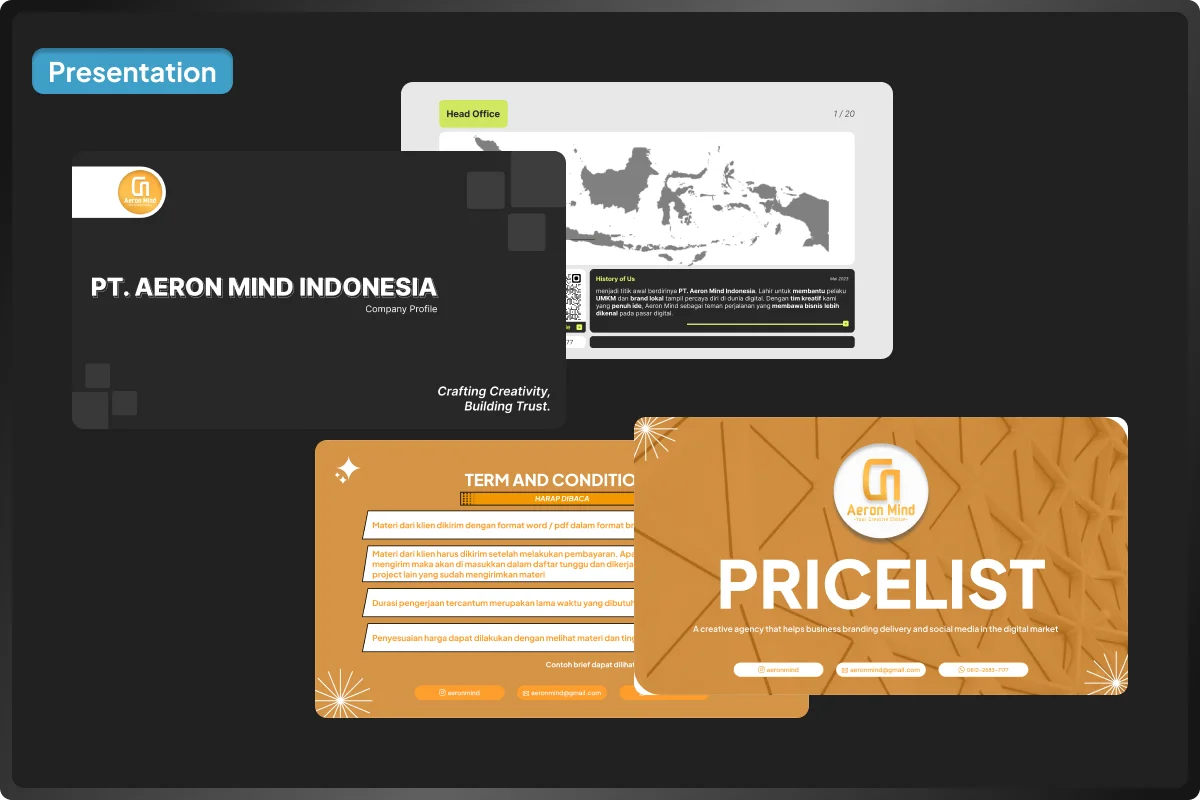
Presentation
A company profile presentation is designed to introduce a brand clearly and professionally, who they are, what they do, and what makes them different. It combines structured storytelling with consistent brand visuals (logo usage, colors, typography, and layout) to convey credibility, highlight key offerings, and support business goals, such as partnerships, pitching, and sales.
Document
Documents like invoices, receipts, and other operational templates are part of a brand’s everyday touchpoints. They’re designed to be clean, easy to read, and consistent with the brand identity, using the same logo, typography, colors, and layout rules. The goal is to make information clear, reduce errors, and keep the brand experience professional in every transaction.
Visual Asset
Photography, packaging design, banners, menus, and promotional creatives across social media and offline channels. Built with consistent brand rules and tailored to the target audience to keep messaging clear, visuals relevant, and campaigns aligned across touchpoints.
Hi...
Thanks for being here. Branding isn’t just about visuals; it’s about creating connection, trust, and a consistent experience in every touchpoint, from digital content to printed materials.
If you’d like to collaborate or discuss how branding can strengthen your product’s presence, feel free to reach out.